The evidence-led answer
NST verdict
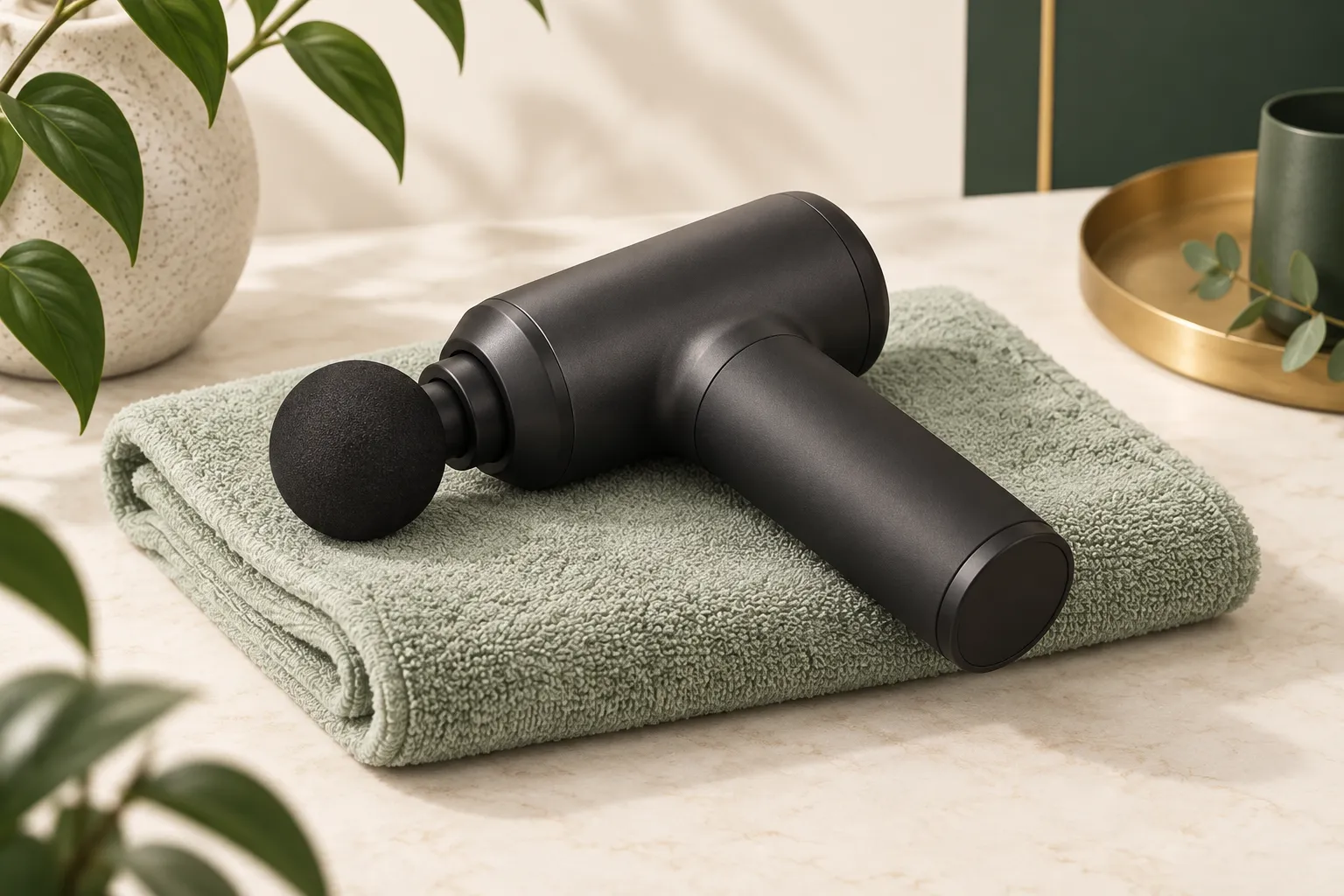
For recovery, the honest answer is probably not. In two randomised trials a five minute massage gun session after hard exercise did no better than resting for soreness, strength or range of motion, and one trial found slightly more soreness in the treated leg for a few hours. A percussive device also matched a foam roller and plain rest for pain at 24 and 48 hours. Where a massage gun earns its place is comfort and convenience. If brief percussion feels good, loosens you up before a session, and keeps you consistent, that is a fair reason to own one. Just do not expect it to speed recovery, and know a cheap ball does most of the same job.
The case for buying it
A massage gun is quick, needs no floor space and no technique, and many people enjoy how it feels on a tight calf or set of quads. If a few minutes of that before or after training makes you more likely to show up, or simply makes training more enjoyable, that is worth something. It is also easier on the hands and wrists than digging into a knot with your thumbs or leaning into a hard ball, which matters if you have grip or wrist trouble. As a warm up tool it is at least as reasonable as foam rolling.
The case against buying it
The thing a massage gun is sold to do, speed recovery, cut next day soreness, improve performance, is exactly what the controlled trials fail to show. Two randomised studies found it no better than doing nothing, and one saw a small short term rise in soreness. It is one of the pricier recovery gadgets, it needs charging, it is bulky to travel with, and the noisier models are unpleasant to use near other people. A lacrosse or massage ball costs a fraction as much, fits in a pocket, and gives a very similar feel, and gentle movement plus time does the actual recovering.
Pros and cons
In favour
- Fast and effortless, with no floor, no technique, a few minutes on a muscle.
- Easier on the hands and wrists than thumb pressure or a hard ball.
- Many people find it genuinely pleasant, which can help them stay consistent.
- Reasonable as a warm up tool, on a par with foam rolling.
Against
- Two randomised trials found no recovery benefit versus resting, and one saw slightly more soreness afterwards.
- One of the pricier recovery gadgets, and it needs charging and is bulky to travel with.
- A lacrosse or massage ball gives a similar feel for a fraction of the cost.
- The recovery, soreness and next day performance claims in the marketing are not supported head to head.
What this means in practice
Buy a massage gun if you like how percussion feels, want an effortless way to loosen up before training, or have wrist trouble that makes hands on work uncomfortable, and treat it as a comfort tool, not a recovery accelerator. If you are buying it to recover faster or hurt less the next day, the trials say save your money, since a ball plus gentle movement and time does the real work.
Practical meaning
Buy a massage gun if you like how percussion feels, want an effortless way to loosen up before training, or have wrist trouble that makes hands on work uncomfortable, and treat it as a comfort tool, not a recovery accelerator. If you are buying it to recover faster or hurt less the next day, the trials say save your money, since a ball plus gentle movement and time does the real work.
Limitations and uncertainty
The two randomised trials are small, 65 and 36 people, short, out to 48 hours, test a single session on one muscle group, and use single devices, so different protocols could give different results. The recovery methods review is about hands on massage, not devices, and its effects are still small. Benefits like feels good and better adherence are plausible but not measured. The comparison with a ball is a judgement call. No price, ranking or product test is implied.
No product needed
This page is here to answer the question, not force a product.
Some research pages are deliberately product-free because adding a retailer link would not help the reader make a better decision. When a product is genuinely relevant, it appears after the evidence and is clearly labelled.